Where to Buy Hard to Find Steel Products in South Africa with G Tech Steel
When a standard steel merchant cannot supply the size, grade, length, or volume a project needs, delays can spread quickly through fabrication, construction, installation, and delivery schedules. The issue is rarely that steel is unavailable. The issue is finding the right supplier with the network, product knowledge, and sourcing process to locate it.
Where to Buy Hard to Find Steel Products in South Africa?
G Tech Steel supports steel buyers across South Africa from its Johannesburg South base, with the ability to source specialized steel products, both locally and internationally. That matters when the requirement sits outside common stock lines, such as steel for pylons, fabricated steel, long steel, or large steel coils.
Where to Buy Hard to Find Steel Products in South Africa
South Africa has a strong industrial steel market, but not every product is held in stock at all times. Demand from mining, energy, transport, building, manufacturing, and export projects can place pressure on certain sizes and grades.
This is where specialist sourcing adds value. A general supplier may offer what is available on the floor. A sourcing-focused steel partner works backwards from the project requirement and checks local mills, stockholders, processors, fabricators, and international supply routes.
For hard-to-find steel products in South Africa, that difference can decide whether a project waits weeks for a substitute or receives steel that matches the original specification.
A good supplier should help confirm:
The correct steel grade and standard
The required thickness, width, length, or coil size
Whether the steel must be cut, drilled, welded, galvanised, or fabricated
Lead times for local supply compared with import supply
The paperwork needed for quality checks and site approval
Where possible, buyers should ask for material certificates. These documents help confirm the steel grade and origin. For infrastructure, energy, construction, and export work, this is often not optional.
Steel products G Tech Steel can help source
Hard-to-find steel does not mean rare for every buyer. It often means unusual for normal merchant stock. G Tech Steel’s value lies in matching the buyer’s requirement with the right supply channel.
Steel for pylons
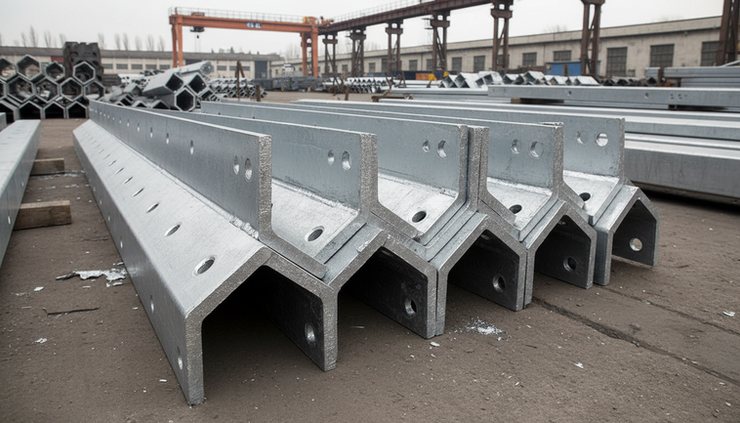
Pylon steel is used in structures that must carry load, resist weather, and meet strict project requirements. It may include angles, plates, bolts, lattice components, and galvanised parts.
Because pylons are often used in power transmission and communication infrastructure, the steel must be consistent and traceable. A small mismatch in size or coating can cause site delays. Buyers should confirm whether the project needs cut-to-length steel, drilled sections, or hot-dip galvanising before placing an order.
Fabricated steel
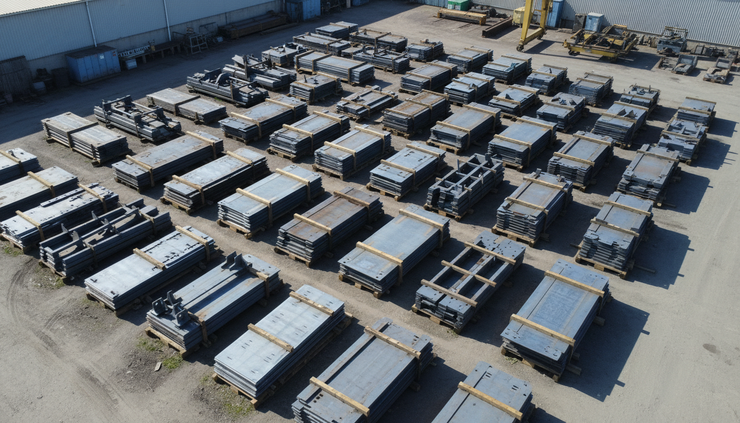
Fabricated steel is steel that has been processed for a specific use. This can include cutting, bending, welding, hole punching, assembly, and surface treatment.
It is common in construction frames, platforms, brackets, supports, walkways, and plant structures. The key buying question is not only “Can you supply the steel?” It is also “Can it arrive in the form the project needs?”
For example, a manufacturer may need plate cut to a drawing. A construction contractor may need beams with pre-drilled holes. A plant maintenance team may need replacement steelwork that matches an existing structure.
Long steel
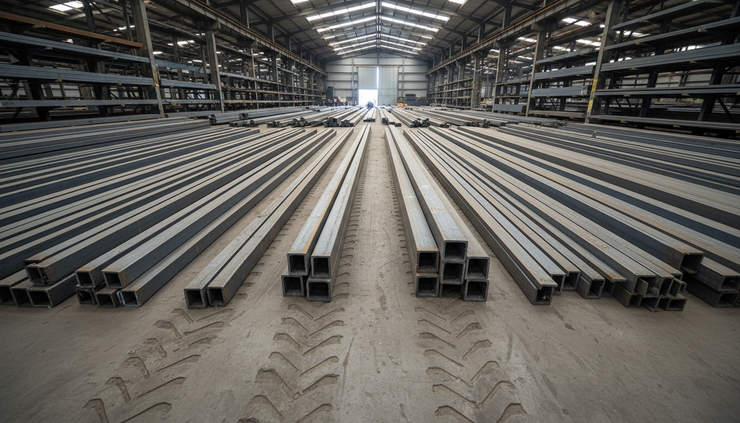
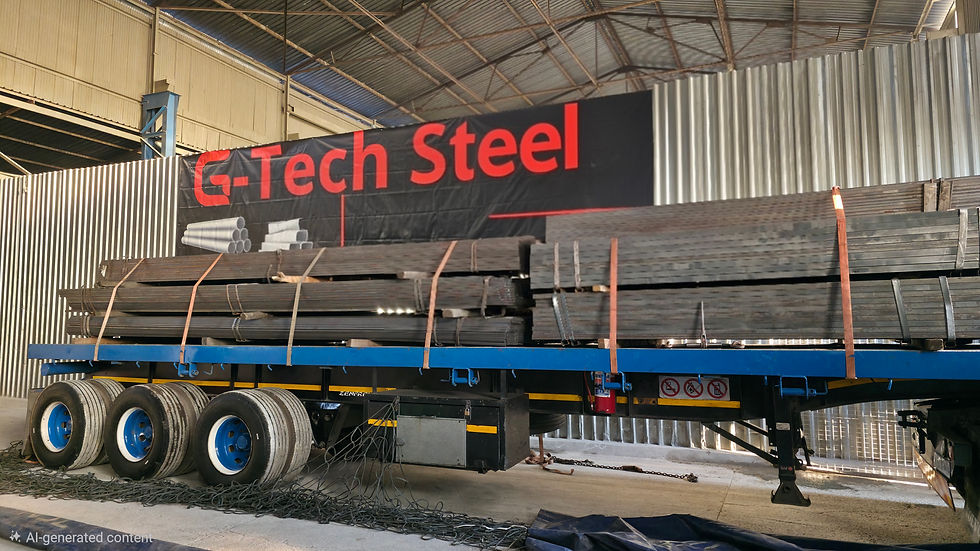
Long steel refers to products made in long lengths, such as beams, channels, angles, flat bars, round bars, square bars, and reinforcing steel. These products are common in building, engineering, mining support, fencing, transport frames, and general fabrication.
Long steel becomes difficult to source when the size is unusual, the length is non-standard, or the grade is not commonly stocked. Transport also matters. Long lengths need careful loading and delivery planning, especially for sites outside major industrial centres.
Big coils
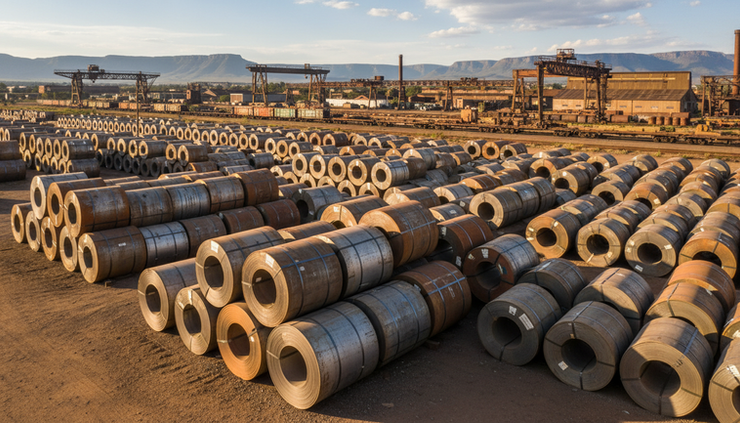
Large steel coils are used by manufacturers that process steel into sheet, strip, tubing, roofing, cladding, automotive parts, tanks, and other products. Coil buyers often need to match width, thickness, coating, surface finish, and weight.
Big coils require more than a purchase order. They may need slitting, de-coiling, storage, and safe handling. A supplier that understands coil logistics can reduce the risk of damage, incorrect sizing, or machine downtime.
How to choose a supplier for unique steel needs
Buying specialised steel is a technical purchase, but the selection process can be simple if the right checks are in place.
Start with the full specification.
A clear request should include grade, dimensions, quantity, finish, tolerances, delivery location, and required date. If a drawing is available, send it early.
Ask about local and import options.
Local supply can be faster when the product is available. Imported steel may be the better option for unusual grades, very large volumes, or mill-specific requirements. The supplier should explain the trade-off in lead time, cost, and risk.
Check quality paperwork.
Material certificates, test reports, and coating documents help prove that the steel matches the order. This is especially important for structural, export, and infrastructure work.
Confirm processing ability.
If steel must be cut, profiled, drilled, bent, welded, galvanised, or packed in a specific way, confirm this before ordering. Processing after delivery can add hidden time and cost.
Review delivery and handling plans.
Big coils, long beams, and fabricated components need the right trucks, lifting equipment, and packaging. Damage during delivery can be as costly as a wrong product.
Work with a supplier that communicates clearly.
A good steel sourcing partner gives realistic lead times and flags supply risks early. Silence is expensive when a production line or construction programme is waiting.
Why G Tech Steel is a practical sourcing partner
G Tech Steel is positioned to support buyers who need more than off-the-shelf steel. With knowledge of local supply channels and access to international sourcing, the team can help locate products that are difficult to find through standard routes.
This is useful for fabricators quoting complex jobs, construction companies working to tight programmes, importers filling stock gaps, and manufacturers that need consistent input material.
The best result comes when supplier and buyer work from the same information. Accurate specifications, drawings, and delivery expectations allow G Tech Steel to search wider, compare suitable options, and recommend a practical supply path.
FAQ
Can G Tech Steel source steel that is not available locally?
Yes. When local supply is limited, G Tech Steel can explore international sourcing options. Lead times, shipping, and customs requirements should be checked before ordering.
What information should be sent with a steel enquiry?
Send the grade, size, quantity, finish, delivery area, and required date. If fabrication is needed, include drawings or clear sketches.
Is imported steel always cheaper than local steel?
No. Imported steel may suit certain grades or volumes, but shipping, duties, exchange rates, and lead times can affect the final cost.
What makes pylon steel different from general steel?
Pylon steel often needs accurate dimensions, load-bearing strength, corrosion protection, and traceable paperwork. Project specifications should guide the purchase.
Can large coils be cut or processed before delivery?
In many cases, yes. Coils can often be slit, cut to sheet, or prepared for manufacturing, depending on the material and available processing equipment.
The takeaway
Hard-to-find steel needs a supplier with product knowledge, sourcing reach, and clear communication. G Tech Steel helps South African buyers locate specialised steel for demanding projects, from pylon components and fabricated steel to long steel and big coils. Start with an accurate specification, ask the right questions, and choose a partner that can search beyond standard stock when the project calls for it.

Comments